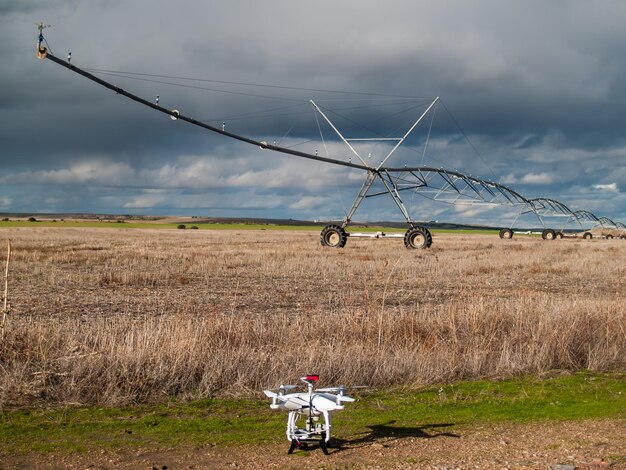
Western Slope Farmers Caught in Triple Squeeze of Drought, Federal Cuts, and Market Volatility
Farmers across Colorado's Western Slope are navigating a perfect storm of converging pressures that threaten the region's agricultural foundation. Water supplies are shrinking, federal support is tightening, and commodity prices remain unpredictable—leaving growers with fewer tools to weather the combined strain.
The region's farming economy, built on irrigation from snowmelt and river systems, depends on stable water access and steady market conditions. Neither is assured anymore. State officials have acknowledged that drought conditions persist across the Western Slope, while federal agricultural programs face budget constraints that reduce safety nets farmers traditionally relied on. Meanwhile, global commodity markets create pricing swings that make planning difficult even for experienced operators.
Water Under Pressure
The Western Slope's water challenges run deep. The region's agricultural heartland draws from river systems that feed farms, ranches, and orchards across multiple counties. Successive dry years have reduced snowpack and stream flows, forcing irrigation districts to manage allocations more tightly than in the past.
Farmers report shorter water seasons and reduced availability per acre. Some operations are adjusting crop selections or fallowing land entirely. Others are investing in more efficient irrigation systems, though the upfront costs are substantial. State water agencies have worked with agricultural users on conservation strategies, but officials acknowledge the limits of efficiency gains when the underlying supply shrinks.
The uncertainty extends beyond this season. Climate patterns suggest drier conditions may persist, and Colorado's water law—which prioritizes senior rights and interstate commitments—leaves junior water users vulnerable. For farmers on the Western Slope, that means less predictability in long-term planning.
Federal Support Thinning
Federal crop insurance, disaster assistance, and commodity programs have historically provided a buffer during difficult years. The Western Slope's farms have benefited from these nationwide frameworks, which help stabilize income when yields drop or prices fall.
Recent federal budget actions have constrained some of these programs, state lawmakers have noted. Disaster assistance availability has narrowed, and some crop-support mechanisms operate under tighter funding. For a region where agriculture remains economically significant, these reductions hit harder than in areas with more diversified economies.
Farmers are being forced to carry more of their own risk. Insurance premiums have risen, and coverage gaps have widened. Those without substantial reserves face tougher choices when multiple stress factors converge.
Market Volatility and Farm Economics
Global commodity markets have become increasingly volatile. Prices for wheat, hay, livestock, and other Western Slope staples swing sharply based on international supply, demand shifts, and geopolitical factors far outside farmers' control. A bumper crop in a competing region can crater local prices; tariff announcements ripple through supply chains.
This volatility makes it harder for growers to lock in margins or plan capital investments. A farmer might decide to plant a certain crop expecting reasonable returns, only to see prices collapse before harvest. During dry years, lower yields compound the problem—less product at worse prices.
Smaller and mid-sized operations struggle most. Large operations can spread risk across more land and crop types, and may have capital reserves to absorb losses. Smaller farms have less cushion and fewer options to diversify quickly.
Local Impact and State Response
For Western Slope counties, agriculture is often a cornerstone of the local economy and community identity. When farms struggle, equipment dealers, seed suppliers, grain elevators, and rural services all feel pressure. Property tax bases depend partly on farm valuations, and rural schools rely on tax revenue tied to agricultural land.
State officials have acknowledged the stresses facing the region's farming community and indicated ongoing attention to water management and agricultural support. However, state resources for direct assistance are limited, and federal program changes are largely beyond state control.
Farmers are adapting—some exploring value-added agriculture, others forming cooperatives to share costs and market access. But adaptation takes time and capital. The immediate challenge is surviving the convergence of drought, federal reductions, and market headwinds without losing operations or land to forced sales.
The Western Slope's agricultural future depends on water availability, market recovery, and sustained support. How those pressures evolve will shape the region's farm economy for years to come.